Hanabi support
April 2, 2026
 Plastic software has entered the zeitgeist: that vibe coded software is cheap, flexible, but inappropriate for commercial use.
These last few months at Kernel have been brutal. Plastic software has made support even harder: code quality has universally declined. Yes, we are shipping faster than ever and code improves faster than ever, but that means we’re constantly in a state of things being broken at the edges. And that’s me there, at that broken edge, because customers rarely email support about the working features.
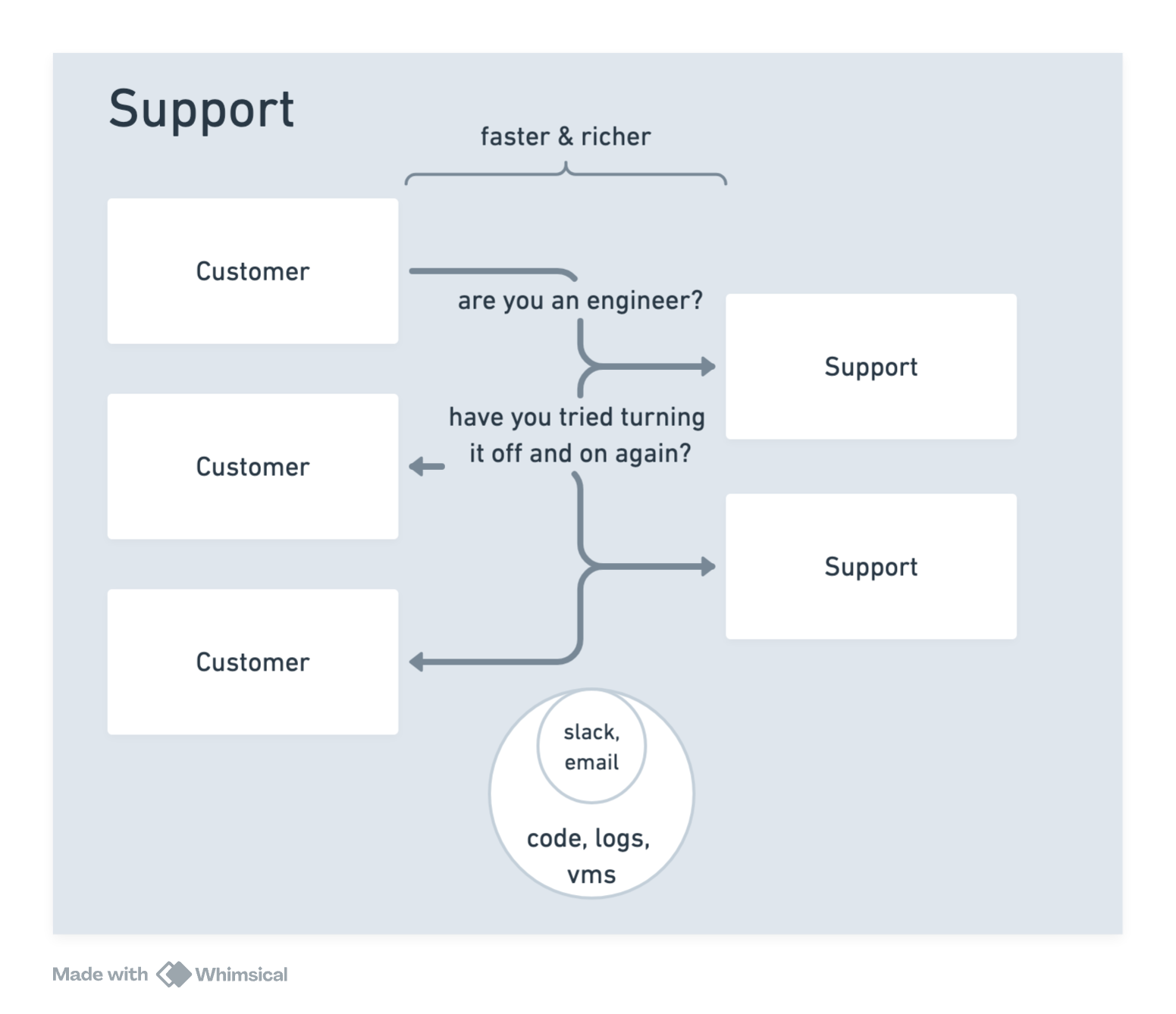
Support sucks. Both sides start off assuming the base case and must perform a series of “sanity checks”…aka making sure the other party is sane. Support asks “Have you tried turning it off and on again?” and the customer asks, “Can I speak to an engineer?” And some portion of customers just drop off after being asked too many sanity checks, but support will inherently count that conversation as resolved.
It was only in March that I finally took the time to lay out a CLAUDE.md. It immediately lightened my load, doing research and composing reports in parallel. Probably a dozen support tools have AI features that could have done the same. I threw in an addendum to my customer response instructions: “Provide code samples.” Now, I’m showing, not telling. Yes, it’s plastic software, but it lets me widen the spectrum of communication. Briefly, communication isn’t limited by human fingers on a keyboard, but by code and compilers.
This made me realize that support isn’t a queue or even a conversation. It’s Hanabi. Support and customer are solving a problem together as quickly as possible, but are constrained by policy on what they can share with each other. We’re figuring out whether the next “play” is a code fix in the company or the customer’s codebase as we discard hypotheses. And the faster that humans can get out of the way, the faster agents can figure out the finesse plays.
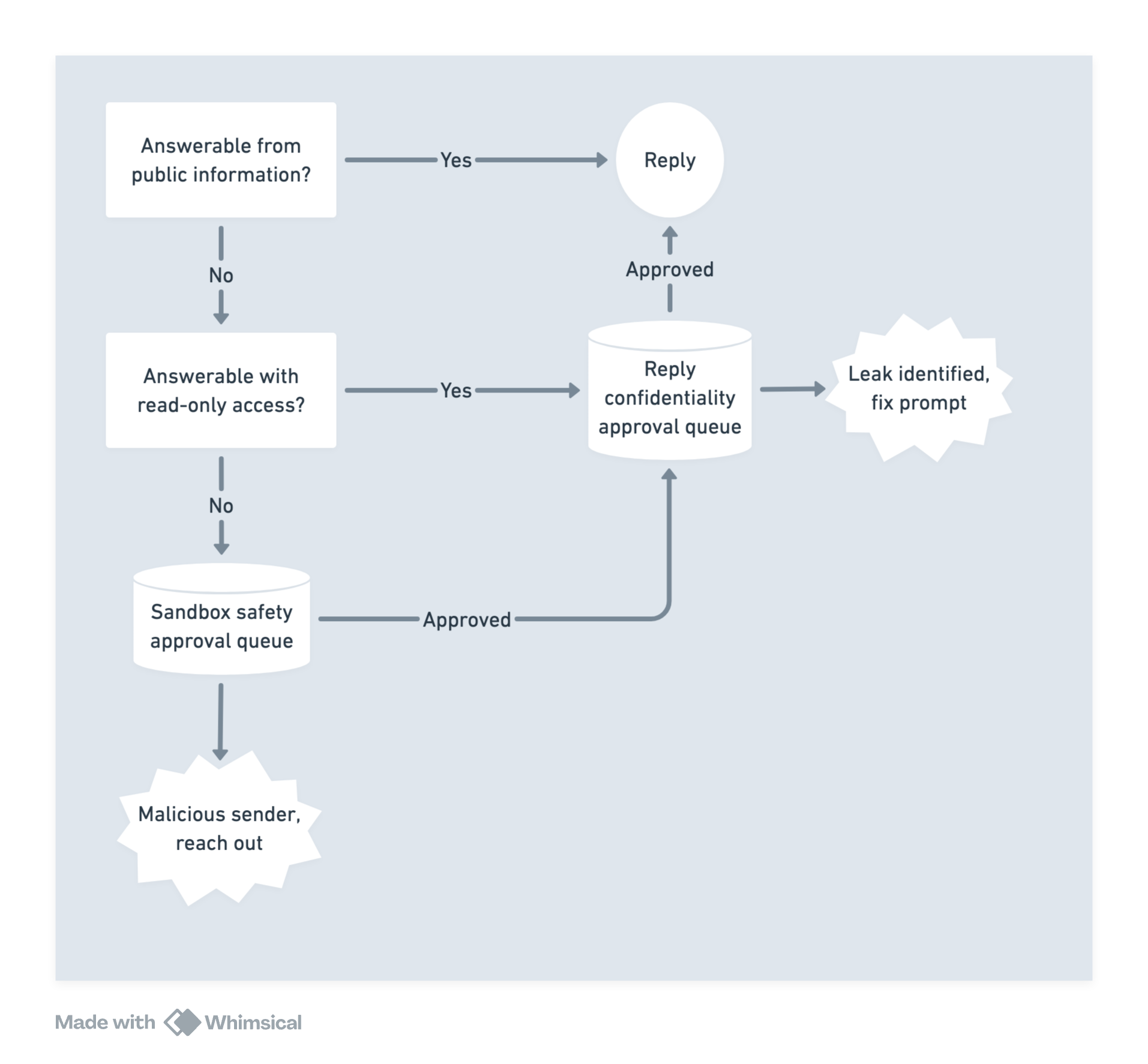
The last boundary is trust: prompt injection remains real, so a human must verify incoming messages that require more in-depth investigation (running test code) are not malicious. Also, outgoing messages for agent loops that access confidential information must be verified, but this can be done by an adversarial agent. Of course, final human approval is still required: compliance is about responsibility, which still must be assigned to a human. But the sheer efficiency and scale potentially unlocked is inspiring.